

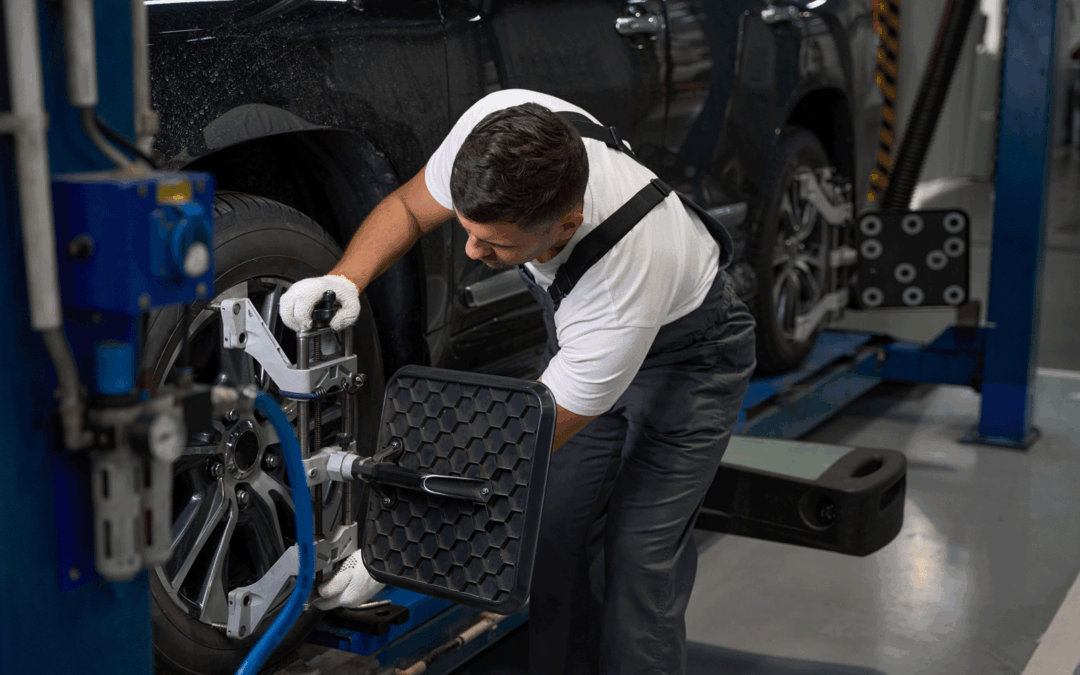
How proper balance supports ride comfort, extends tire life, and reduces vibration
When it comes to a smooth, safe ride, your tires do more than just keep you rolling. One of the most overlooked aspects of tire care is wheel balancing, a simple but essential service that can make a significant difference in how your vehicle feels on the road.
At Harris Automotive, we often help drivers understand how this small adjustment can lead to big benefits in comfort, safety, and long-term savings. Here’s what you need to know about wheel balancing, how it’s different from alignment, and why it’s a key part of smart automotive maintenance.
What Is Wheel Balancing?
Wheel balancing ensures that the weight of the wheel and tire assembly is evenly distributed. Even a slight imbalance can cause your tires to spin unevenly, creating vibrations and putting stress on your suspension system.
The Process:
- Each wheel is mounted on a balancing machine
- The machine spins the wheel to detect imbalances
- Small weights are added to the rim to correct the imbalance
The result is a smoother ride, better handling, and improved performance.
Wheel Balancing vs. Alignment: What’s the Difference?
While wheel balancing and alignment are often confused, they address different aspects of your vehicle’s performance:
| Wheel Balancing | Wheel Alignment |
| Focuses on equal weight distribution in the tire and wheel assembly | Adjusts the angles of the wheels (toe, camber, caster) |
| Fixes vibrations at certain speeds | Corrects pulling to one side or uneven tire wear |
| Involves adding small weights | Involves adjusting suspension angles |
Both services are important and can be done during routine automotive maintenance, especially after installing new tires or suspension components.
How Wheel Balancing Affects Ride Comfort and Tire Life
Ride Comfort
Unbalanced wheels often cause noticeable vibration in the steering wheel, floorboard, or seat, especially at highway speeds. These vibrations can make driving uncomfortable and tiring.
By correcting the imbalance, wheel balancing improves:
- Steering smoothness
- Handling precision
- Overall ride quality
Tire Life
Imbalanced wheels create uneven tire wear, leading to flat spots or cupping. This can drastically shorten the lifespan of your tires and increase your chances of blowouts or tread issues.
Proper balancing helps:
- Maximize tire life
- Maintain even tread wear
- Protect your suspension and steering components from unnecessary stress
When Should You Get Your Wheels Balanced?
While there’s no one-size-fits-all schedule, here are some general guidelines:
- Every 5,000 to 7,000 miles or during regular tire rotations
- After installing new tires or wheels
- If you feel vibrations in the steering wheel or seat
- After hitting a pothole, curb, or road debris
- If you notice uneven tire wear or reduced fuel efficiency
A simple wheel balance check is often enough to restore ride comfort and protect your tires.
Trust Harris Automotive for Vibration Reduction and Ride Smoothness
Our team at Harris Automotive uses advanced wheel balancing technology to eliminate unwanted vibrations and improve your driving experience. As part of our commitment to quality automotive maintenance, we also check for alignment issues and inspect your tires for wear or damage.
Why Choose Harris Automotive:
- ASE-Certified Technicians
- Free Safety Inspection with every service
- 3-Year / 36,000-Mile Nationwide Warranty
- Convenient locations in Westerville and Blacklick
- Friendly, honest service from a local, family-owned business
Schedule Your Wheel Balancing Service Today
If you’ve noticed vibrations, steering issues, or uneven tire wear, it may be time for a wheel balance. Contact Harris Automotive to schedule a service and enjoy a smoother, safer ride.